Annual Report & Accounts 2026
76
FINANCIAL LIABILITIES
0 to 6 months £
7 to 12 months £ 1 to 5 years £ Pay when paid £ Total £ Trade payables
88,836
–
–
12,029,446
12,118,282
Accrued expenses
2,364,973
211,721
169,201
10,956,578 13,702,473
Lease Liabilities
297,424
297,424
1,228,799
–
1,823,647
At 31 January 2026
2,751,233
509,145
1,398,000 22,986,024 27,644,402
0 to 6 months £
7 to 12 months £ 1 to 5 years £ Pay when paid £ Total £ Trade payables
175,700
–
– 10,046,652
10,222,352
Accrued expenses
1,544,202
210,000
179,702
9,595,543
11,529,447
Lease Liabilities
297,424
297,424
1,823,647
–
2,418,495
At 31 January 2026
2,017,326
507,424
2,003,349
19,642,195
24,170,294
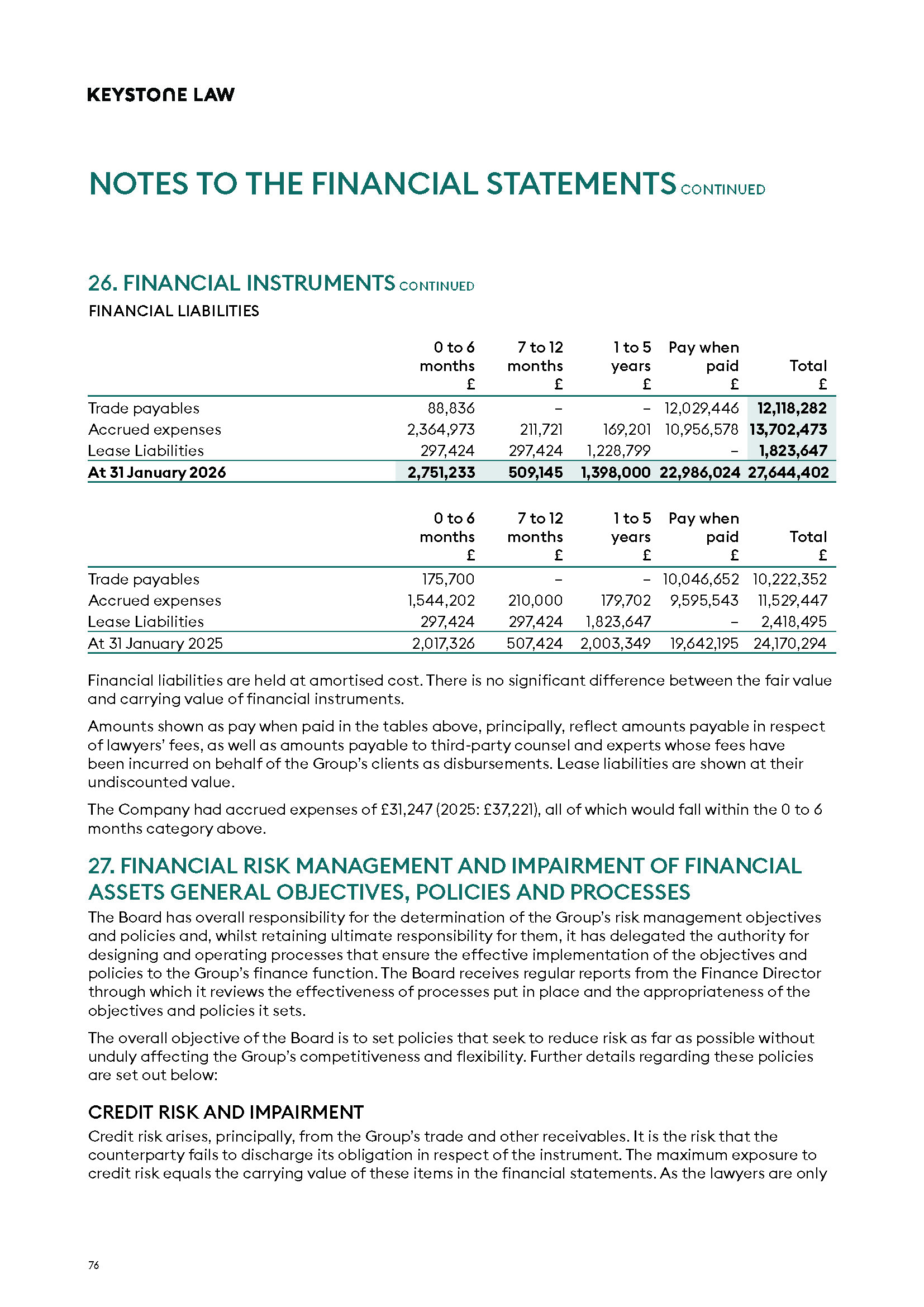
Financial liabilities are held at amortised cost. There is no significant difference between the fair value and carrying value of financial instruments.
Amounts shown as pay when paid in the tables above, principally, reflect amounts payable in respect of lawyers’ fees, as well as amounts payable to third-party counsel and experts whose fees have been incurred on behalf of the Group’s clients as disbursements. Lease liabilities are shown at their undiscounted value.
The Company had accrued expenses of £31,247 (2026: £37,221), all of which would fall within the 0 to 6 months category above.
27. FINANCIAL RISK MANAGEMENT AND IMPAIRMENT OF FINANCIAL ASSETS GENERAL OBJECTIVES, POLICIES AND PROCESSES
The Board has overall responsibility for the determination of the Group’s risk management objectives and policies and, whilst retaining ultimate responsibility for them, it has delegated the authority for designing and operating processes that ensure the effective implementation of the objectives and policies to the Group’s finance function. The Board receives regular reports from the Finance Director through which it reviews the effectiveness of processes put in place and the appropriateness of the objectives and policies it sets.
The overall objective of the Board is to set policies that seek to reduce risk as far as possible without unduly affecting the Group’s competitiveness and flexibility. Further details regarding these policies are set out below:
CREDIT RISK AND IMPAIRMENT
Credit risk arises, principally, from the Group’s trade and other receivables. It is the risk that the counterparty fails to discharge its obligation in respect of the instrument. The maximum exposure to credit risk equals the carrying value of these items in the financial statements. As the lawyers are only NOTES TO THE FINANCIAL STATEMENTS CONTINUED
26. FINANCIAL INSTRUMENTS CONTINUED
FINANCIAL LIABILITIES
0 to 6 months £
7 to 12 months £ 1 to 5 years £ Pay when paid £ Total £ Trade payables
88,836
–
–
12,029,446
12,118,282
Accrued expenses
2,364,973
211,721
169,201
10,956,578 13,702,473
Lease Liabilities
297,424
297,424
1,228,799
–
1,823,647
At 31 January 2026
2,751,233
509,145
1,398,000 22,986,024 27,644,402
0 to 6 months £
7 to 12 months £ 1 to 5 years £ Pay when paid £ Total £ Trade payables
175,700
–
– 10,046,652
10,222,352
Accrued expenses
1,544,202
210,000
179,702
9,595,543
11,529,447
Lease Liabilities
297,424
297,424
1,823,647
–
2,418,495
At 31 January 2026
2,017,326
507,424
2,003,349
19,642,195
24,170,294
Financial liabilities are held at amortised cost. There is no significant difference between the fair value and carrying value of financial instruments.
Amounts shown as pay when paid in the tables above, principally, reflect amounts payable in respect of lawyers’ fees, as well as amounts payable to third-party counsel and experts whose fees have been incurred on behalf of the Group’s clients as disbursements. Lease liabilities are shown at their undiscounted value.
The Company had accrued expenses of £31,247 (2026: £37,221), all of which would fall within the 0 to 6 months category above.
27. FINANCIAL RISK MANAGEMENT AND IMPAIRMENT OF FINANCIAL ASSETS GENERAL OBJECTIVES, POLICIES AND PROCESSES
The Board has overall responsibility for the determination of the Group’s risk management objectives and policies and, whilst retaining ultimate responsibility for them, it has delegated the authority for designing and operating processes that ensure the effective implementation of the objectives and policies to the Group’s finance function. The Board receives regular reports from the Finance Director through which it reviews the effectiveness of processes put in place and the appropriateness of the objectives and policies it sets.
The overall objective of the Board is to set policies that seek to reduce risk as far as possible without unduly affecting the Group’s competitiveness and flexibility. Further details regarding these policies are set out below:
CREDIT RISK AND IMPAIRMENT
Credit risk arises, principally, from the Group’s trade and other receivables. It is the risk that the counterparty fails to discharge its obligation in respect of the instrument. The maximum exposure to credit risk equals the carrying value of these items in the financial statements. As the lawyers are only NOTES TO THE FINANCIAL STATEMENTS CONTINUED
26. FINANCIAL INSTRUMENTS CONTINUED